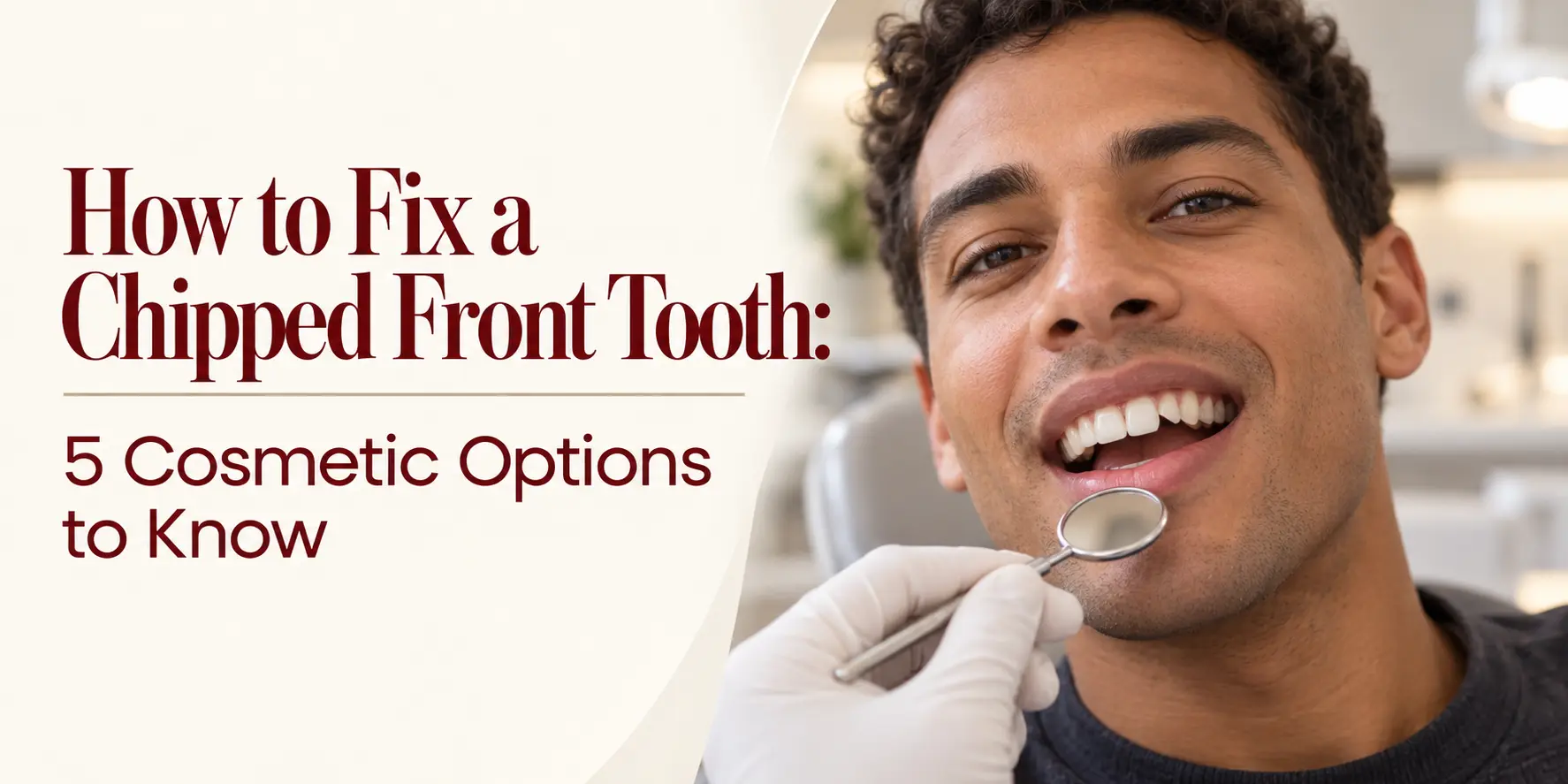
How to Fix a Chipped Front Tooth: 5 Cosmetic Options to Know
A chipped front tooth can make your smile look uneven and leave a rough or sensitive edge. Many chips can be repaired without major treatment. The right chipped front tooth repair depends on how much tooth is missing, whether it hurts, and how much of the visible tooth needs restoring.
Here are five common ways to fix a chipped tooth and how to choose between them.
Chipped Front Tooth: What To Do First
Rinse with water, avoid chewing on the chipped tooth, and save any broken piece you find. Do not try to glue it back yourself. Dental wax can temporarily cover a sharp edge.
Pain, swelling, bleeding, strong sensitivity, or a loose tooth are reasons to contact a dentist promptly. Cleveland Clinic also recommends having a chipped tooth evaluated because treatment depends on the damage.
If a child chips a front tooth, Dr. Avianto can help parents explain how the injury happened, whether a piece was saved, and whether pain or swelling is present.
Five Chipped Front Tooth Repair Options
A tiny edge chip and a larger break need different solutions. The best option should restore the tooth without doing more than necessary.
Smooth And Reshape A Tiny Chip
A very small chip may only need smoothing and gentle reshaping. This can remove a rough edge and make the tooth look more even. It works best when little tooth material is missing.
Reattach The Broken Piece
If you find the broken piece, take it to your dental visit. Sometimes it can be placed back onto the tooth. Whether this works depends on the condition of the piece and the remaining tooth.
Rebuild It With Front Tooth Bonding
Front tooth bonding is often useful for small to medium chips. A tooth-colored material is added, shaped to rebuild the missing edge, and polished to blend with nearby teeth.
Bonding can often be completed in one visit and usually changes less of the natural tooth than a veneer or crown. See other cosmetic smile treatments when appearance is the main concern.
Cover The Front With A Veneer
A veneer covers the visible front surface instead of only the missing corner. It may suit a larger chip or a tooth that also needs changes in shape, length, or color.
Because it involves more commitment than dental bonding for a chipped tooth, it is not automatically best for a small chip. Explore porcelain veneer options for more detail.
Protect A Badly Broken Tooth With A Crown
A crown may be considered when a large part of the tooth is missing or the remaining tooth needs more protection. It covers much more of the tooth than bonding or a veneer.
This is a more involved broken tooth repair, so the tooth should be checked first. Our damaged tooth repair page explains broader repair choices.
Bonding, Veneer, Or Crown?
Choosing is easier when you compare what each option is designed to do.
| Option | Usually Best For | Visits | Main Benefit | Main Trade-Off |
| Smoothing | Tiny chip | 1 | Very simple | Only for small damage |
| Bonding | Small-medium chip | Often 1 | Quick repair | May need touch-ups |
| Veneer | Larger visible flaw | Usually 2+ | Improves shape and appearance | More commitment |
| Crown | Major break | Varies | More coverage | Most involved |
If one corner is missing, bonding may be enough. If the whole visible surface needs improvement, a veneer may fit better. A crown is usually considered when much more coverage is needed.
Chipped Front Tooth Repair Cost
Cost depends on the treatment, chip size, and number of teeth involved. Smoothing and bonding are generally simpler than veneers or crowns.
Ask what each option includes, how much of the tooth it changes, and what future maintenance may be needed instead of choosing only by starting price.
Front Tooth Repair Longevity
No repair lasts the same amount of time for everyone. Bonding may eventually need polishing, repair, or replacement. Veneers and crowns offer more coverage but can also wear or chip.
Grinding, nail biting, chewing ice, sports injuries, and biting very hard foods can shorten the life of a repair.
Front Tooth Repair Aftercare
Avoid using repaired front teeth to open packages, bite pens, or chew ice. Wear a mouthguard during contact sports and ask about protection if you grind your teeth.
Regular preventive dental visits also allow the repair to be checked before a small problem becomes larger.
Chipped Front Tooth Warning Signs
A chipped front tooth is not always only about appearance. Strong pain, swelling, ongoing bleeding, major sensitivity, a loose tooth, or a large missing section may need faster attention.
After an injury, Dr. Avianto can guide parents on changes to watch for in a child’s tooth and when a prompt evaluation may be important.
Restore Your Chipped Front Tooth Confidently
A chipped front tooth can often be repaired without choosing the most extensive option first. Tiny chips may only need smoothing, while front tooth bonding can work well for many small to medium breaks. Veneers or crowns may be more suitable as damage increases.
Have the tooth checked and choose a repair that balances appearance, protection, cost, and long-term care.
Why Choose Northern Valley Aesthetic Dentistry?
Northern Valley Aesthetic Dentistry takes a thoughtful approach to chipped front teeth. Dr. Avianto helps parents understand repair choices after a child’s tooth injury, explains what may affect the decision, and makes the next steps easier to follow, from a simple cosmetic fix to a more protective option when needed.