Digital Dental Impressions: Why 3D Scanning Beats Old Molds?
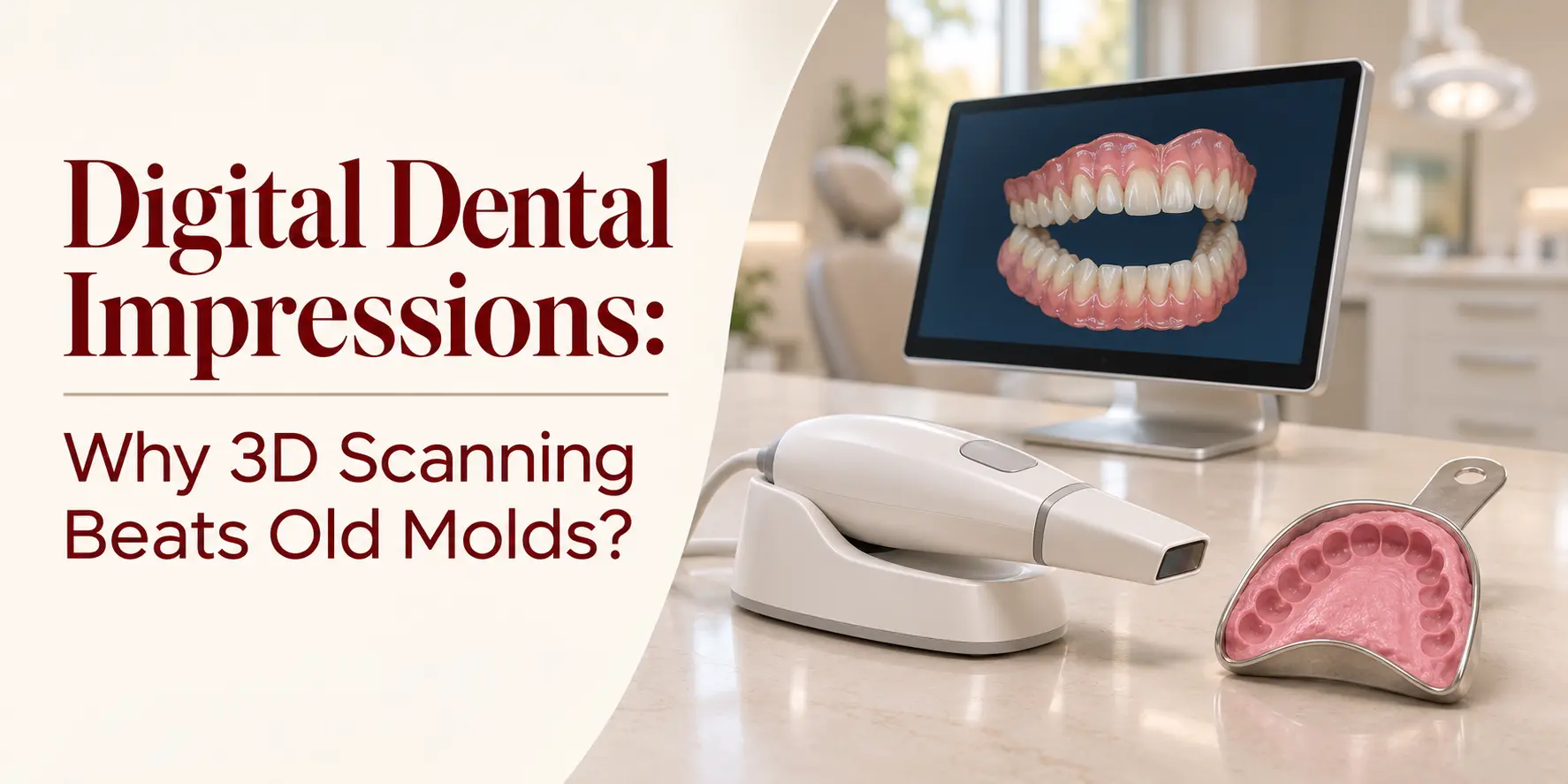
If you remember biting into a tray of thick putty while trying not to gag, there is now a cleaner option. Digital dental impressions use a small camera wand to create a detailed 3D model of your teeth. The scan is quick, appears on a screen immediately, and avoids the taste and pressure of old molds.
This 3D dental scan is not an X-ray. It uses light to record the visible shape of your teeth and bite for treatment planning.
Digital Dental Impressions Explained
A digital impression is a computer-made model of your teeth. As a small scanner moves around your mouth, it captures many images from different angles. Software joins those images to show the shape, position, and spacing of your teeth in three dimensions.
The Cleveland Clinic overview of dental impressions explains that dentists can use putty-based trays or a digital scanner. Both create a copy of your teeth for planning and making custom dental work.
Northern Valley uses iTero 3D scanning as a dental molds alternative. Parents can ask Dr. Avianto whether this method is suitable for their child’s planned care and what the scanner will record.
3D Dental Scanning Steps
Knowing what happens can make the appointment feel easier. There is usually no special preparation, no numbing, and no recovery time.
Before The 3D Scan
The dental team explains why the impression is needed and which teeth must be recorded. Tell Dr. Avianto if your child has a strong gag reflex, feels nervous, or has struggled with molds before. She can guide parents on what to expect and when the scan may be paused.
During The 3D Scan
The digital dental scanner is gently moved over the teeth. Images appear on a nearby screen as the model takes shape. You can breathe normally, and the scanner can be stopped and restarted if you need a short break. Most scans take only a few minutes.
After The 3D Scan
The dentist checks the model before the appointment ends. If one spot is unclear, only that area may need to be scanned again. The file can then be stored or sent electronically to a dental lab without shipping a physical mold.
Digital Impressions vs Traditional Molds
Both methods create a copy of your teeth, but the patient experience and the way the information is handled are different.
| Factor | Digital Impressions | Traditional Molds |
| Method | Small camera wand | Tray filled with soft putty |
| Comfort | No bulky material or bad taste | May feel full or trigger gagging |
| Time | Usually completed in minutes | Material must stay in place while it sets |
| Review | Model appears immediately | Problems may appear after the tray is removed |
| Correction | One unclear area can be rescanned | The full mold may need to be repeated |
| Delivery | File is sent electronically | Mold may need physical shipping |
Digital scanning also removes common mold problems such as bubbles, tearing, or changes in shape after removal. However, it does not guarantee a perfect result. Accuracy still depends on a clear view of the teeth, the size of the area, and careful scanning.
Digital Scanning Comfort Benefits
The biggest difference is not simply newer equipment. It is a less stressful way to collect the information needed for well-fitting dental work.
Someone with a sensitive gag reflex does not have to hold a loaded tray in place. There is no putty taste, and a pause does not mean starting from the beginning. Seeing the 3D model can also make explanations easier because patients and parents can look at the same image as the dentist.
For example, when planning a crown through care that rebuilds damaged teeth, the digital file shows the prepared tooth, nearby teeth, and bite. The lab can use that information to make the crown, while the dentist checks the fit before placing it.
Dental Treatments Using Digital Impressions
Digital impressions are useful whenever dental work must match the teeth closely. Common uses include crowns, bridges, mouthguards, retainers, implant-supported teeth, clear aligners, and veneers.
For clear aligner planning, the scan maps the starting position of the teeth and helps create each set of aligners. When designing custom porcelain covers, it records the shape and spacing needed for a natural fit. The same digital model may also support a discussion about suitable smile improvement choices.
Traditional Molds: When Are They Still Needed?
Digital impressions work well for many common needs, but traditional molds have not disappeared. A dentist may choose putty for certain full dentures, large areas, or places a scanner cannot record clearly. Moisture, movement, and hard-to-see edges can also affect a scan.
The better method is the one that provides dependable information for your specific treatment. Dr. Avianto can help parents understand why a digital scan is recommended for their child or why another approach may be more suitable.
Digital Dental Impressions: Are They Right for You?
Digital dental impressions are a strong choice for people who want a faster, cleaner alternative to putty molds. They can reduce gagging, show results immediately, and simplify sharing with a dental lab. Ask whether scanning fits your treatment, what the fee includes, and why it is preferred for your case.
Why Choose Northern Valley Aesthetic Dentistry?
Northern Valley Aesthetic Dentistry uses digital scanning to make impressions cleaner, quicker, and easier to understand. Dr. Avianto carefully reviews the scan, explains how it supports the planned dental work, and helps parents understand what their child can expect. Schedule a visit to learn whether digital impressions suit your needs..